Berry Street Education Model BSEM at Ararira – Nicky Harding and Claire Howison
At Ararira Springs, we are committed to fostering a learning environment where every child feels safe, supported, and ready to thrive. To support this, our kura has adopted the Berry Street Education Model (BSEM) – a trauma-informed, strengths-based framework designed to boost student wellbeing, engagement, and academic growth.
Why Schools Use It
Schools implementing BSEM often see improvements in student attendance, classroom behaviour, and academic achievement. It is designed to be a “whole school” approach, meaning every adult – from the principal to the support staff – uses the same language and strategies to help support your child. Our journey is already underway: all staff completed intensive training in the Body and Relationship domains in January 2026, and we look forward to completing the full model training in January 2027.
How it Connects to Our Kura
The BSEM doesn’t sit in isolation; it weaves perfectly into our existing wellbeing programme. By focusing on the ‘Body’ domain, we enhance our use of the Zones of Regulation, giving students concrete tools to move from dysregulation back to a ‘Ready to Learn’ state. Furthermore, this model breathes life into our school’s wellbeing model: Te Whare Tapa Whā. By nurturing taha hinengaro (mental health) and taha whānau (social connection), we ensure the walls of our students’ wellbeing – physical, mental, spiritual, and family – remain strong and balanced.
Key Aspects for our Whānau
- Strengths-Based Approach: We focus on what our learners can do. By identifying individual character strengths, we build student stamina and confidence rather than just managing behaviour.
- Safety & Regulation: You may hear your tamariki talk about mindful breathing or morning and afternoon circles. These are BSEM strategies used to create a calm, predictable classroom rhythm.
- Relational Trust: We believe that learning happens through connection. BSEM reinforces our commitment to building deep, trusting relationships between staff and students.
- Proven Impact: Research shows this model leads to improved student motivation, better classroom atmosphere, and improved academic outcomes.
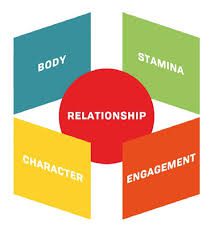
The Domains we are Mastering:
- Body: Learning to manage physical stress responses and self-regulate.
- Relationship: Building attachment and trust through positive, consistent interactions.
- Stamina (deeper focus in 2027): Developing the emotional intelligence to persist through challenges.
- Engagement (deeper focus in 2027): Cultivating a classroom culture that sparks a genuine love for learning.
Try These at Home
Here are a few specific BSEM-inspired strategies you can use with your tamariki to support their regulation and connection:
- “Ready to Learn” Check-in: Ask your child what “Zone” they are in. If they are feeling “fizzy” or frustrated, try a 5-4-3-2-1 Grounding activity together: name 5 things you can see, 4 you can touch, 3 you can hear, 2 you can smell, and 1 you can taste.
- Brain Break – Forehead Signature: For a quick reset, have your child try to “write” their name in the air with their forehead. It’s silly, requires focus, and helps shift their mental state.
- Positive Primers: Start a task with a “micro-moment” of joy. This could be sharing one thing you are grateful for or doing a 30-second “dance party” to a favourite song to get the “feel-good” chemicals going before homework.
- Strength Spotting: Instead of just saying “good job,” try naming the specific strength you saw: “I noticed your persistence when you kept trying that tricky puzzle!”
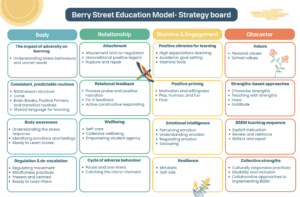
In 2027, we will expand our toolkit to include the Stamina, Character, and Engagement domains. This phase of our training focuses on moving beyond regulation to help our learners build the “grit” and “spark” they need for long-term, life-long success.
Recent Comments